

North Carolina is famous for its lush landscapes, but for many residents from Raleigh to Fayetteville, that beauty comes with a heavy price: the legendary Carolina pollen season. As we move through the spring of 2026, the yellow dust coating our cars and porches is more than an eyesore; it is a significant health trigger. Many sufferers retreat indoors to find relief, only to discover that their symptoms persist even behind closed doors.
At Comfort First Heating & Cooling, we know that simply staying inside isn’t enough if your home’s air is saturated with the same irritants found in the yard. In North Carolina, where humidity and high pollen counts collide, your air conditioner is actually your most powerful tool for respiratory health. This guide explores how your cooling system functions as a high-tech filtration barrier and why professional HVAC integration is the key to breathing easy this season.
The Indoor Air Quality Trap
It is a common misconception that indoor air is naturally cleaner than outdoor air. In reality, indoor air quality can often be worse because allergens like tree pollen, ragweed, and mold spores become trapped. These microscopic invaders hitch a ride into your home on your pets, your shoes, and your clothes. Once inside, they have nowhere to go, circulating from room to room through your ventilation system.
When allergies flare up, many people are tempted to open their windows for a fresh breeze. In North Carolina, this is rarely a good idea for two reasons:
- Inviting the Enemy: Opening windows provides a direct highway for billions of pollen grains to enter your living space.
- Adding Humidity: North Carolina heat combined with high humidity creates a breeding ground for dust mites and mold, turning a bad allergy day into a much more serious discomfort.
How Your AC Alleviates Seasonal Allergies
Believe it or not, your air conditioner is a bit of a wonder invention for health. While its primary job is to keep you cool, its mechanical process provides a natural byproduct of relief for allergy sufferers.
- Moisture Removal: Many common pollutants and allergens are water-soluble. Your air conditioner cools your home by removing moisture (humidity) from the atmosphere. As that water is pulled from the air and drained away, it takes a significant amount of pollen, dust, and particulate matter with it.
- Constant Filtration: As your system pulls air through the return vents, it passes through a filter designed to catch debris. In 2026, modern systems are more effective than ever at scrubbing the air as it circulates, ensuring the air being pushed back into your bedrooms is cleaner than the air it replaced.
Choosing the Best Air Filters for Allergy Relief
While the standard cooling process provides baseline relief, severe allergy sufferers in North Carolina often need an upgraded defense. We recommend moving beyond the basic 1-inch fiberglass filters found in most hardware stores.
- High-Efficiency Particulate Air (HEPA): HEPA filters are the gold standard. These filters are incredibly dense and can trap 99.97 percent of particles as small as 0.3 microns. By installing a HEPA-grade filtration system within your central HVAC unit, you turn your home into a laboratory-grade clean environment.
- MERV Ratings: For those who may not need a full HEPA setup, we recommend filters with a MERV 11 to 13 rating. These are strong enough to capture fine pollen and mold spores without putting excessive strain on your system’s blower motor.
The Danger of Poorly Maintained Units
While a healthy air conditioner helps with allergies, an outdated or poorly maintained unit can actually make them worse.
- The Window Unit Risk: Small window units are far more likely to encourage mold growth than central systems. Many of these units lack the sophisticated drainage needed to dispel the humidity they pull from the room. Moisture accumulates on the cooling coils, mixes with household dust, and creates spores that are then blasted back into your home.
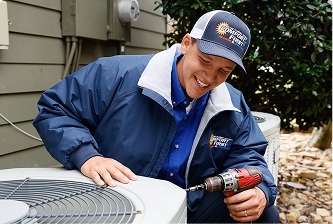
- The Central System Check: In a central AC system, a clogged condensate drain or a dirty evaporator coil can lead to stagnant water and biological growth. Regular professional maintenance is essential to ensure your system is removing allergens, not creating them.
Why Choose Comfort First Heating & Cooling?
At Comfort First, we are more than just HVAC technicians; we are indoor air quality specialists. We serve North Carolina with a commitment to putting your family’s health and comfort at the top of our priority list.
- Expert IAQ Audits: We don’t just guess which filter you need. We perform a thorough assessment of your home and your specific allergy concerns to recommend a custom solution.
- Professional Grade Solutions: From UV germicidal lights that kill mold on the coils to whole-home air purifiers, we offer the most advanced technology available in 2026.
- Master Licensed Technicians: Our team is background-checked, highly trained, and dedicated to a clean, professional workspace.
- Total Comfort Guarantee: We stand behind our work. We ensure your system is calibrated perfectly to manage both the North Carolina heat and the seasonal pollen spikes.
Reclaim Your Home as a Sanctuary
Seasonal allergies shouldn’t dictate your quality of life. By utilizing your air conditioner as a dedicated air purification system, you can find the respite you’ve been looking for. Don’t let the “Carolina Gold” pollen ruin your spring; ensure your HVAC system is prepared to defend your indoor air.
Breathe easier today. Contact Comfort First Heating & Cooling to schedule your indoor air quality service and discover how our advanced cooling solutions can help you win the battle against seasonal allergies!